
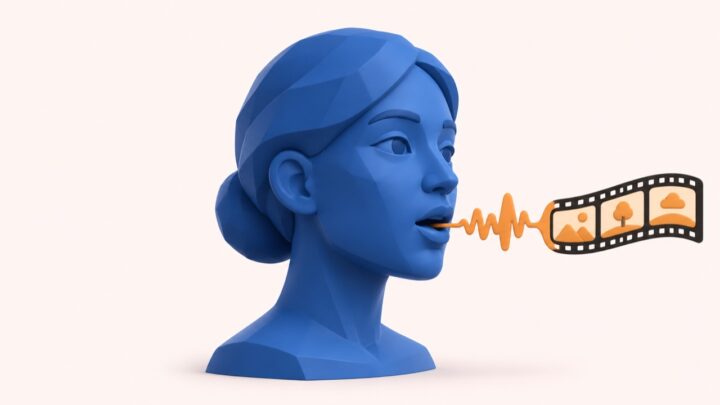
Meituan’s LongCat team has released LongCat-Video-Avatar 1.6, an open AI model that creates a talking video from a still photo and an audio recording. The release, announced in the week of 22 November 2026, upgrades version 1.5 of the same avatar framework.
The model is built for what the project page calls audio-driven avatar generation. The person in the photo moves their mouth to match the speech and also moves their face, hands and body. The page also shows music, singing, live-performance and animation examples, not only speech.
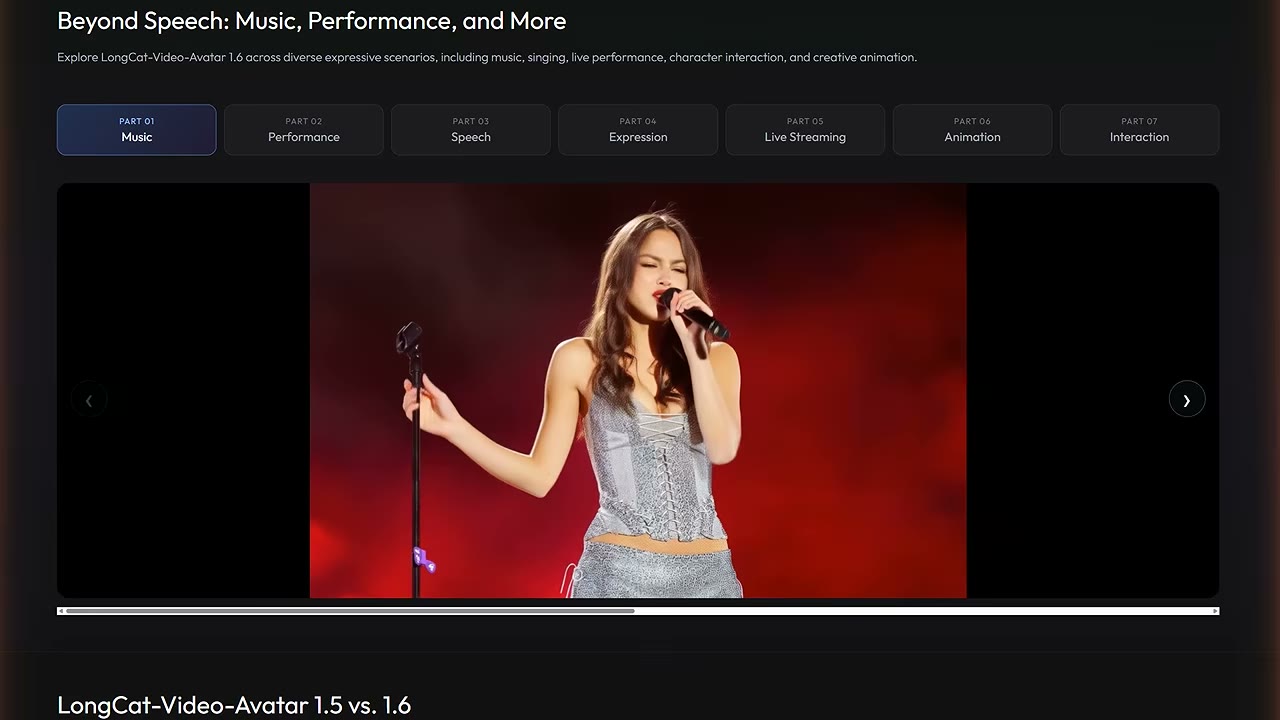
Screenshot of the LongCat-Video-Avatar 1.6 project page. Image: LongCat-Video-Avatar 1.6 project page
What changed in version 1.6
According to the project page, the update has three main parts. It uses a Whisper-large audio encoder, which is the part that turns speech into data the video model can follow. The team says this gives more accurate mouth shapes.
It also adds per-frame optimization, which refines the match between sound and image one frame at a time. The third part is DMD, a distillation method that cuts generation to eight steps so the model runs faster.
The team’s main claim is stability over long videos. Avatar tools often drift as a clip grows, so faces change or motion falls apart. The model card says version 1.6 reduces this error build-up and can keep identity and visual quality in videos longer than 10 minutes. These results come from the developers, and the page shows side-by-side clips rather than independent tests.
The team also ran a human preference study with 33,051 valid votes across six systems. In it, version 1.6 ranked second, behind OmniHuman-2.0 and ahead of HeyGen, Kling Avatar 2.0, OmniHuman-1.5 and version 1.5, with an Elo score of 1068.1.
Availability and licence
The model is available now. The weights are on Hugging Face and ModelScope, and the code and a technical report are on GitHub. The model card lists the MIT license, which is permissive. However, the project page says the demo images and audio come partly from real videos, and that its generated demo content is for academic use only.
The source does not give hardware requirements for running it. Readers who want to try it must download and run it themselves. Readers who make avatar videos of real people should first get that person’s permission.


Community
0 reader comments
No comments yet. Join the conversation with a useful, respectful response.