
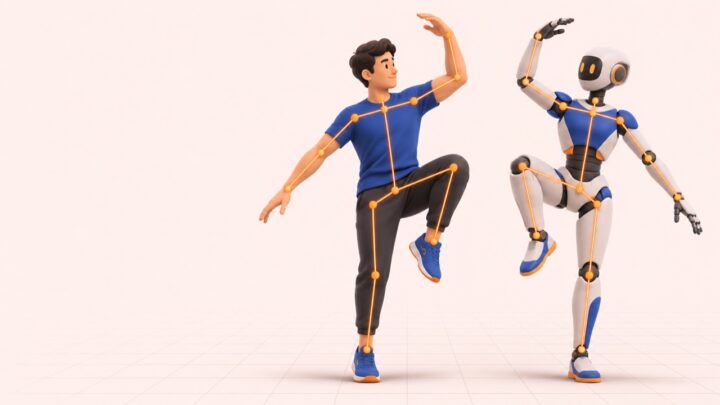
FAB is a new open AI model that rebuilds a person’s body in 3D from a single photo or a video, according to its project page. Researcher Jinkun Cao published the work in November 2026 as a paper on arXiv, together with code and model weights. The name stands for Fast and Accurate Body estimation.
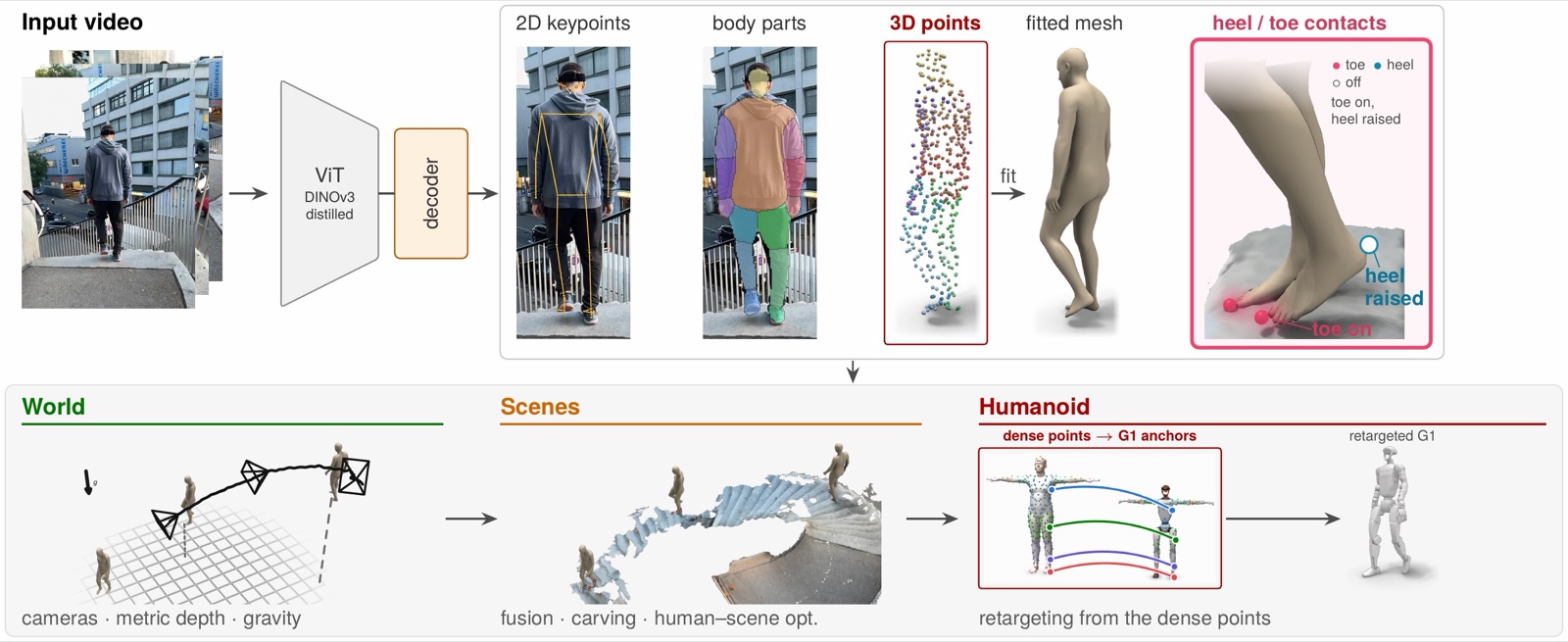
Most body-tracking models predict a few joint positions, or the settings of a standard body mesh. FAB predicts skeleton joints and also dense points across the body surface. It then fits a standard body model called SMPL to those points. The author says this gives both speed and fidelity.
Speed and accuracy claims
The paper reports that the main model, FAB-L, runs at 39.2 frames per second on one RTX 4070 Ti SUPER graphics card. That figure covers the whole pipeline, including finding the person in the frame. The author says this is 4.6 times faster than the body-only path of SAM 3D Body, which ran at 8.5 frames per second in the same comparison.
On the 3DPW benchmark, FAB-L scored a 32.7 mm PA-MPJPE error, against 33.7 mm for SAM 3D Body. PA-MPJPE is the average distance between predicted and true joints after alignment, so lower is better. These are the author’s own re-runs, and the paper is not yet peer reviewed.
FAB also predicts when heels, toes, hands and knees touch a surface. From a moving video it uses these contacts to place the person in a reconstructed 3D scene, so the feet rest on the ground instead of floating.
Robot motion transfer
The project also covers a robotics use. A tool called FAB-Retarget converts the captured motion into movements for a Unitree G1 humanoid robot. The author reports that the resulting reference motion follows the person more closely than four other retargeting tools, including GMR and OmniRetarget. The page shows examples with dancers and with several people in one clip.
The code and weights are on GitHub and Hugging Face, with three model sizes: FAB-S, FAB-L and FAB-H. The code uses the Apache 2.0 licence. The weights are for research and non-commercial use only. Setup also needs the SMPL body model, which requires a separate registration, and SAM licence terms apply to parts of it. The GitHub page says a GPU with CUDA is needed for fast mode, while a CPU works slowly.
For a look at where humanoid robots are heading, see YugaTech’s report on 1X’s NEO home robot.



Community
0 reader comments
No comments yet. Join the conversation with a useful, respectful response.